
St George’s Quay Luneside development consists of 419 units of student accommodation in a riverside location in Lancaster. RoC provided civil, structural and geo-environmental services for the development. The main development was steel frame constructed with metal composite deck. Despite being in the middle of covid, the development completed in 2020 with majority occupancy for the September 2020 intake.
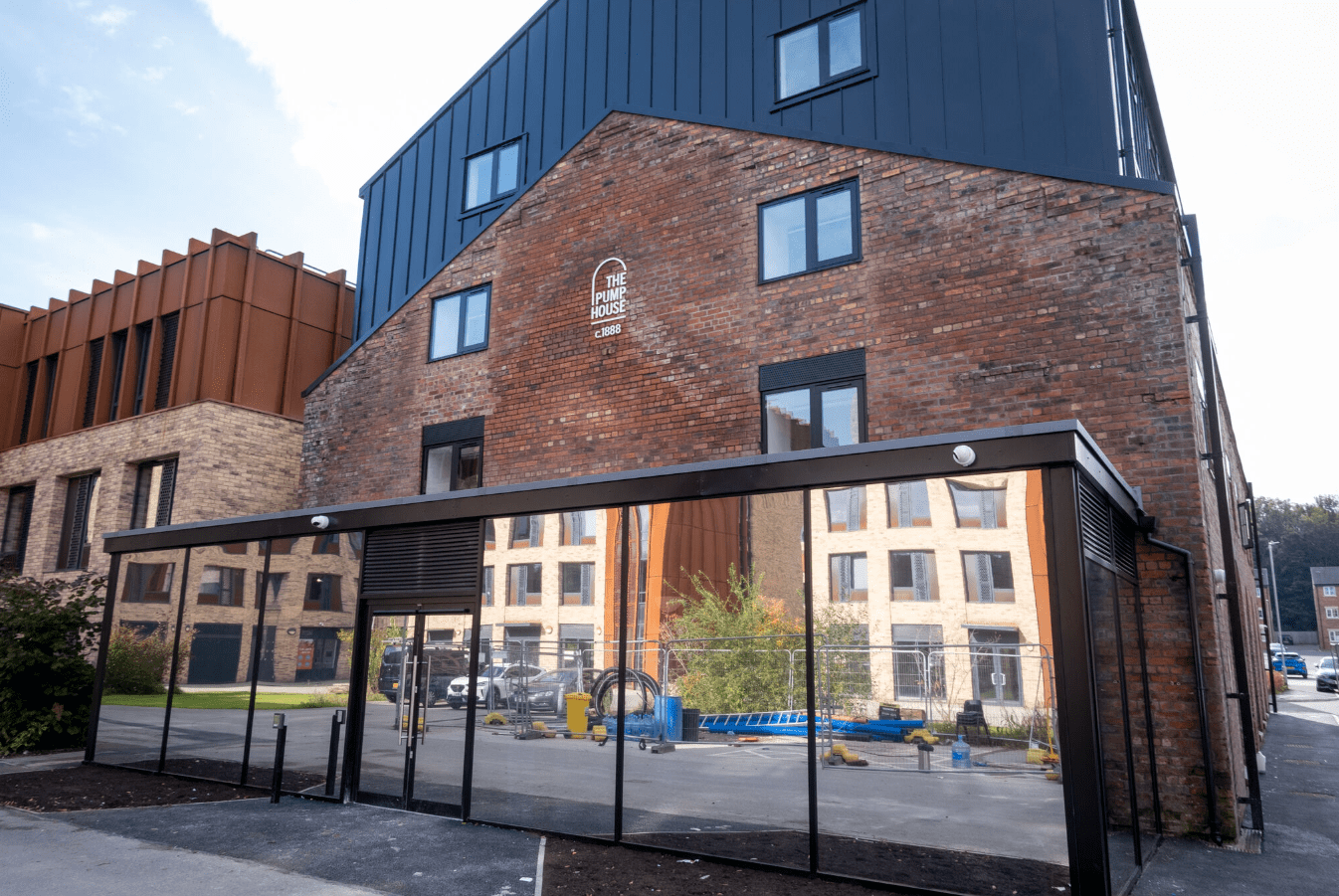
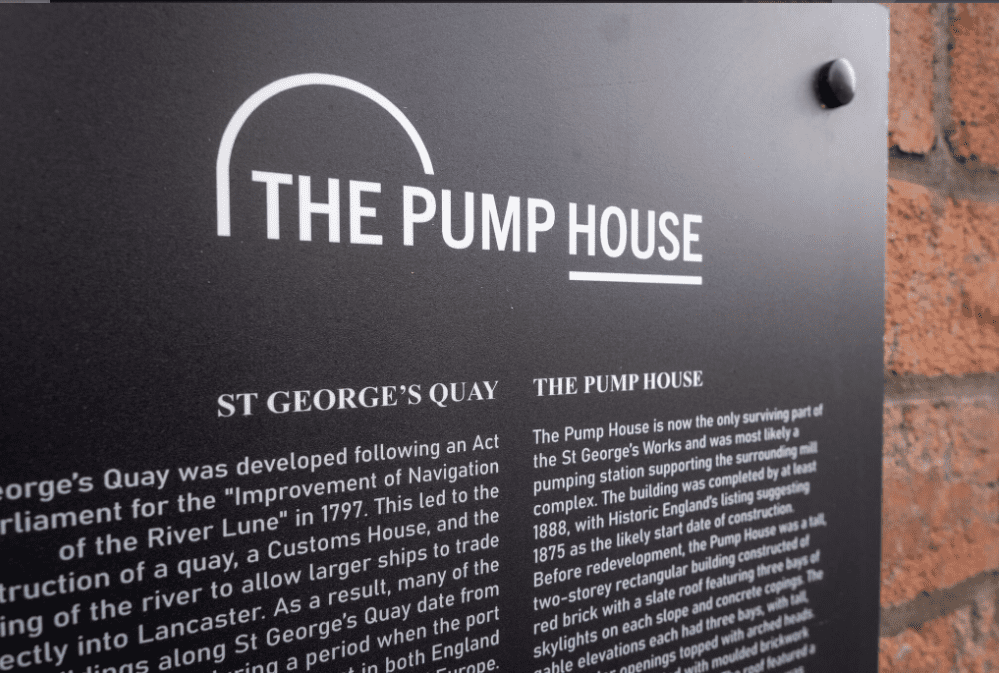
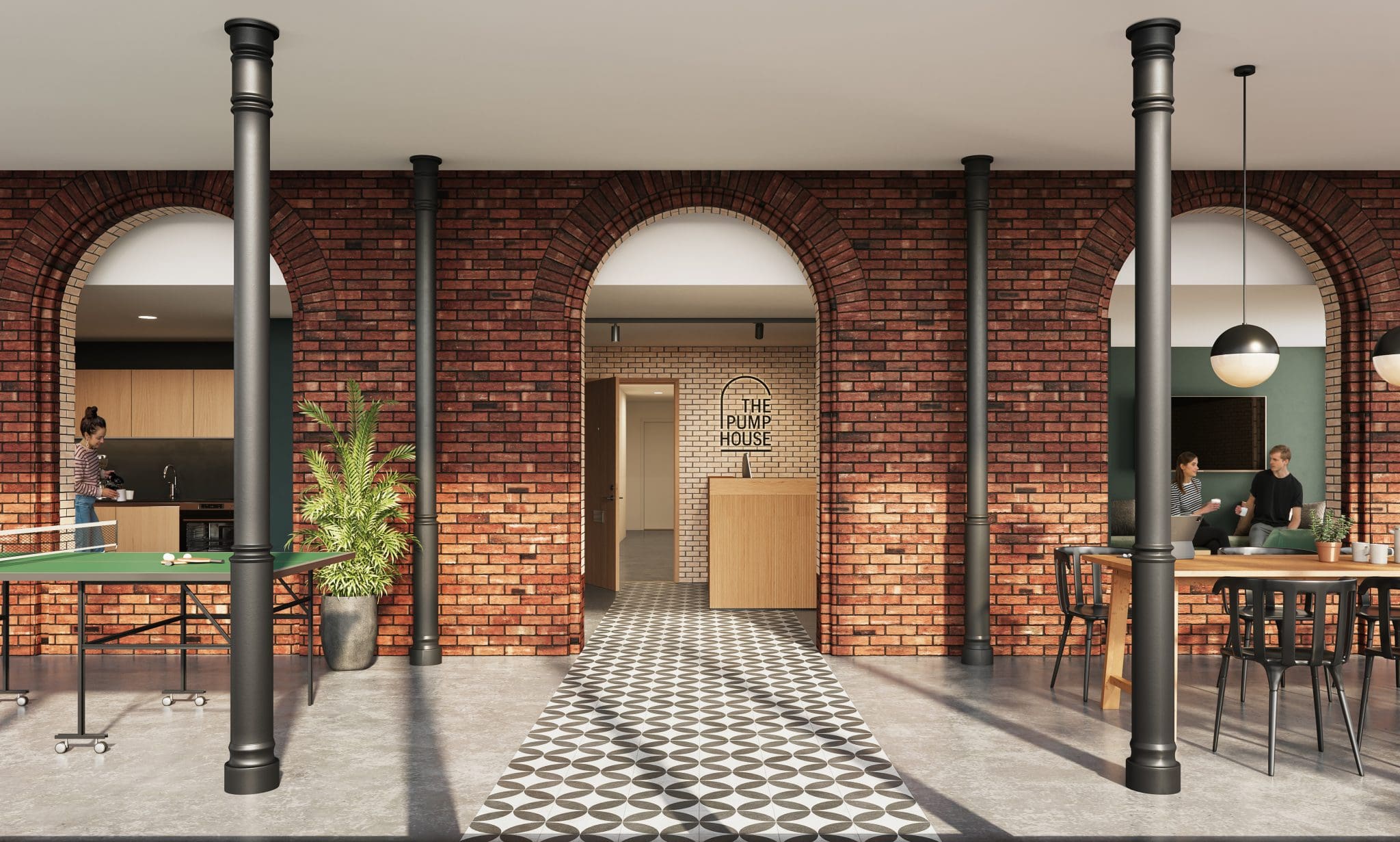
As part of the planning permission for this development, conditions were made that the former mill ‘Pump House’ was to be retained, repurposed and activated. Originally envisaged as a student amenity building the developer struggled with viability and the Pump House remained undeveloped. Eventually the plot was given to specialist student accommodation developer Frisia who envisagedthe Pump House as further student accommodation.
Enabling works for the Pump House commenced in early 2024, with practical completion of the Pump House redevelopment scheduled for September 2025.
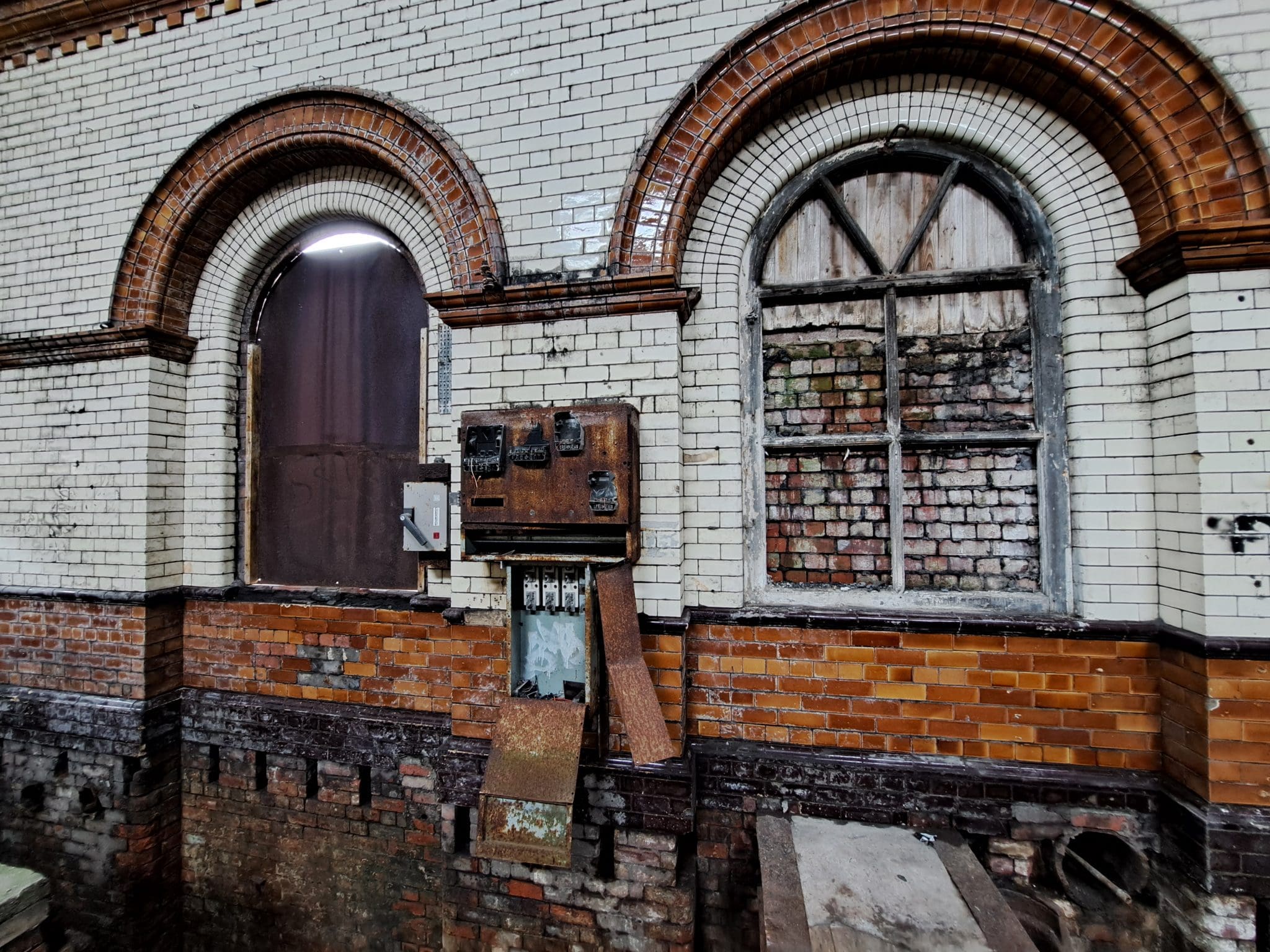
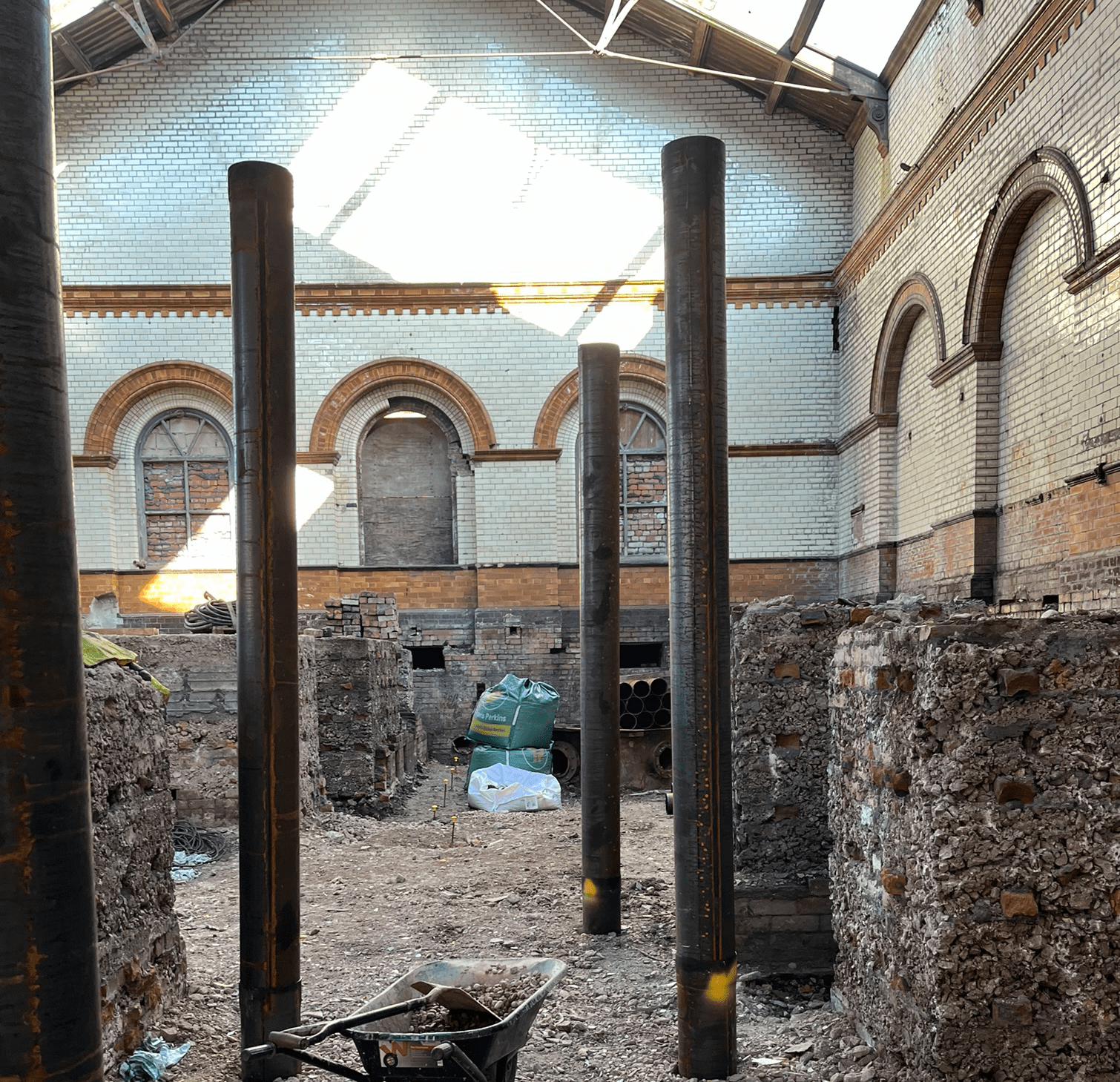
The existing Pump House building comprised a single storey Victorian masonry walled building, with a steel tied timber trussed roof. A semi basement provided runs for pipework and a number of masonry plinths supported the long since removed, machinery. A crane and crane rail were insitu, embedded within the masonry walls. Looking past the dereliction of the failing slate roof and rotting sub floor, the general structural condition of the building was sound.
The Pump House building was stable with no obvious signs of settlement, even though it was known the ground conditions were highly variable including soft clays. This led us to believe a raft foundation solution would be feasible for the scheme considering the
relatively light building loads.
Challenges/Solutions
Challenges included variable strength riverside deposits, ground contamination from a former gas works, flood risk and tidal lock issues.
A key challenge arose from the differing functions between the mixed-use ground floor and the residential above. Several structural options were evaluated, however, RoC Consulting’s proposed solution made selective use of steel beams and columns only where necessary, with further selective timber strengthening within the panelised frame. This had several benefits, firstly reducing works packages, the full frame could now be delivered by the timber contractor, secondly minimising the number of concentrated loads on the raft foundation, helping to preserve efficiency of a uniform load distribution.
Added ValueRoC Consulting was the recipient of the IStructE 2025 Award for the Pumphouse for Most Sustainable Project. Sustainability was high on the client’s list.
| Project | Pumphouse Luneside Lancaster |
| Discipline | Civil Engineering, Earth Sciences, Structural Engineering |
| Client | Frisia Real Estate |
| Architect | Just H Architects |
| Project Duration | 2024 - 2025 |
| Value | £3m |
RoC Consulting
Fourways House
3rd Floor
57 Hilton Street
Manchester
M1 2EJ
RoC Consulting
Get Directions
CitiPark - Dale Street
Get Directions
CitiPark - Tariffi Street
Get Directions
NCP Car Park - Store Street
Get Directions
